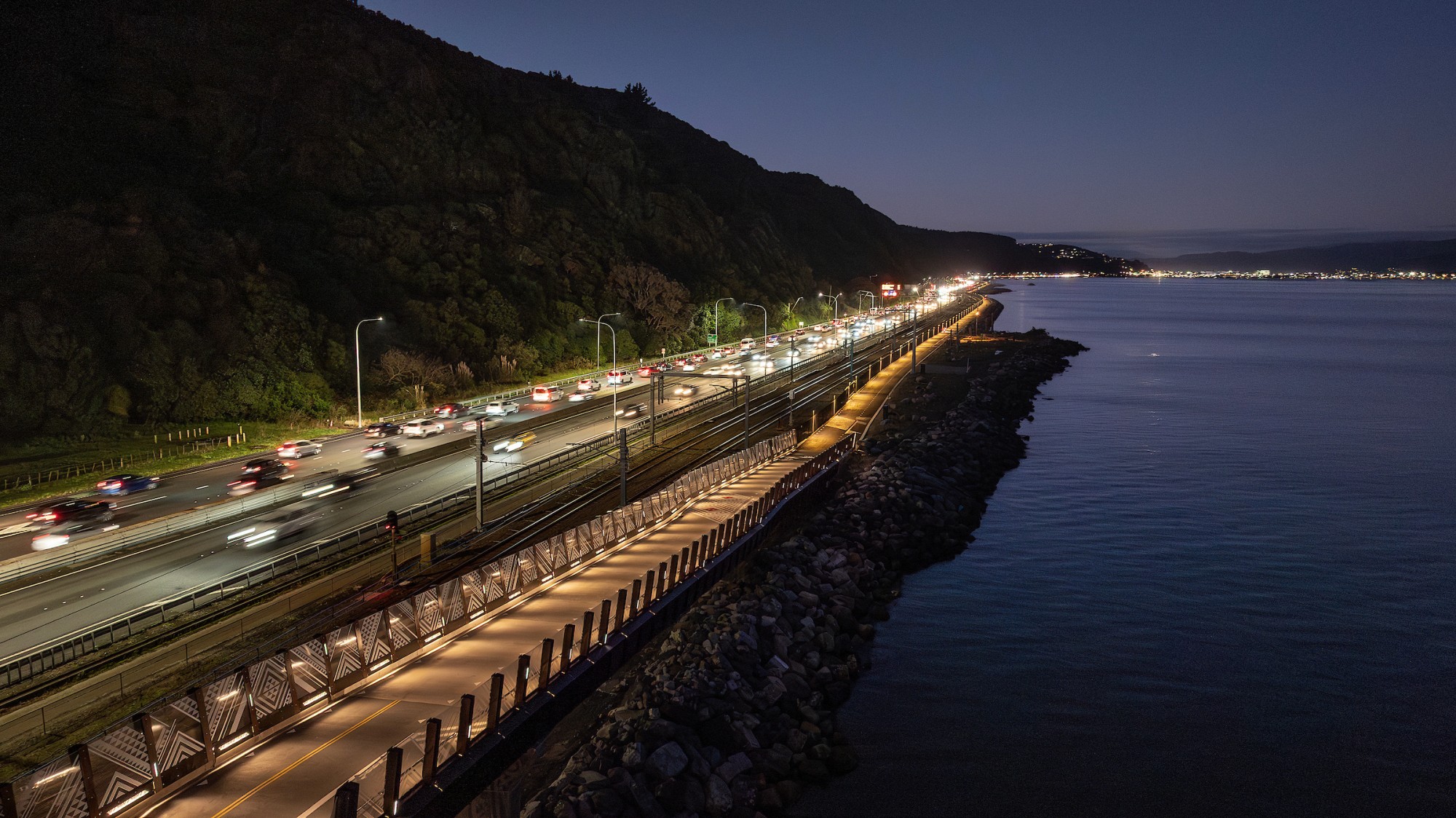
Designing Lighting for a Sensitive Coastal Environment
Te Ara Tupua occupies a unique coastal setting where lighting decisions have a direct impact on the surrounding environment.
A key objective of the lighting design was to minimise unnecessary light spill and support Dark Sky principles wherever possible. Rather than flooding the pathway with light, the design focused on delivering illumination only where it was required, reducing glare and maintaining the natural character of the harbour edge after dark.
This approach helps limit disruption to wildlife inhabiting the coastal environment while allowing people to safely enjoy the pathway throughout the evening. By carefully controlling light distribution and brightness levels, the lighting contributes to a more sustainable and environmentally sensitive public realm experience.
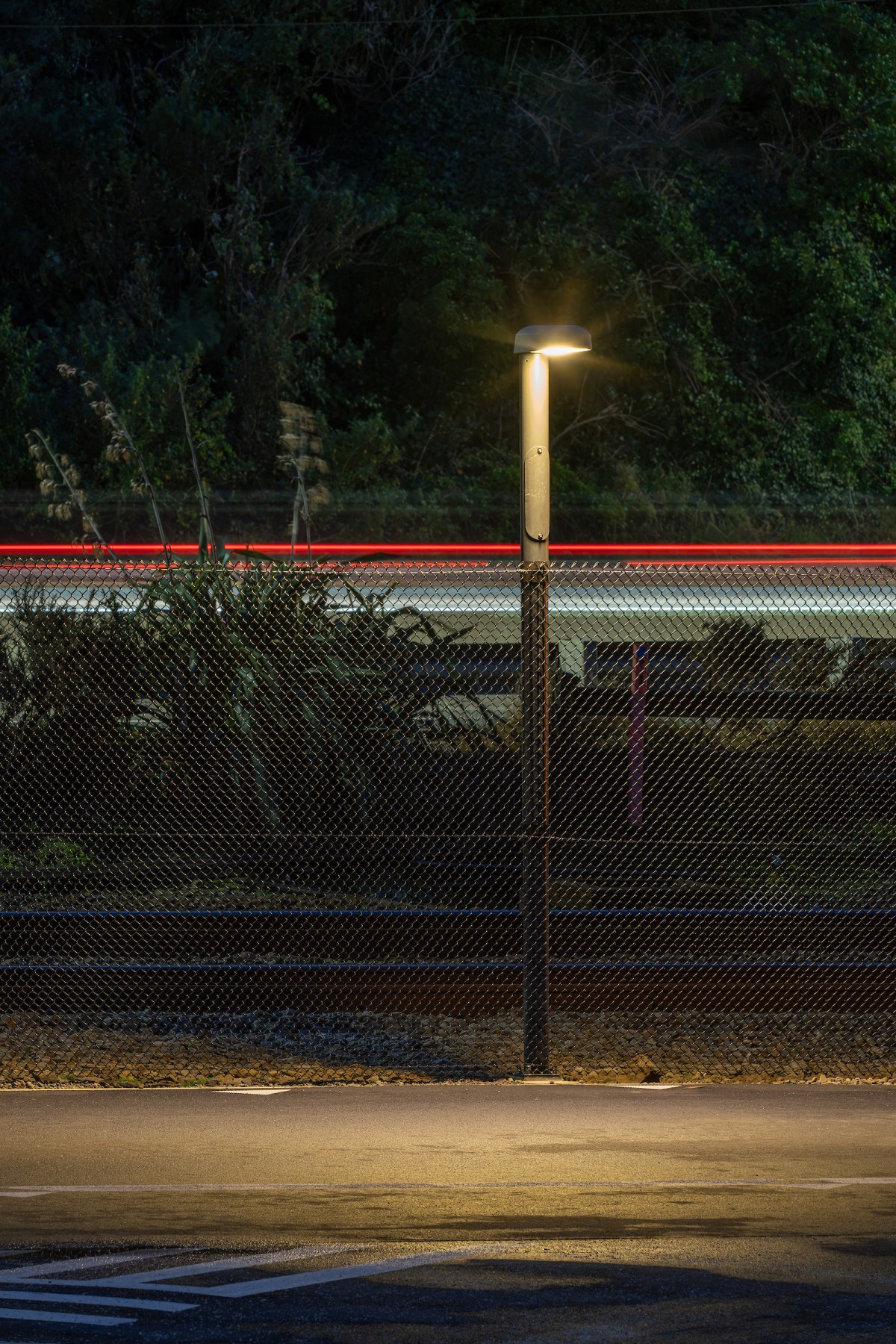
Safety and accessibility remained central to the lighting strategy.
The pathway is used by a wide variety of people, including commuters, recreational cyclists, runners, walkers and families. The lighting needed to support clear visibility along the route, improve wayfinding and help users feel comfortable travelling between destinations after dark.
Particular attention was given to visual comfort, reducing harsh contrasts and providing consistent illumination throughout the journey. This creates a safer and more intuitive experience while encouraging greater use of the pathway outside daylight hours.
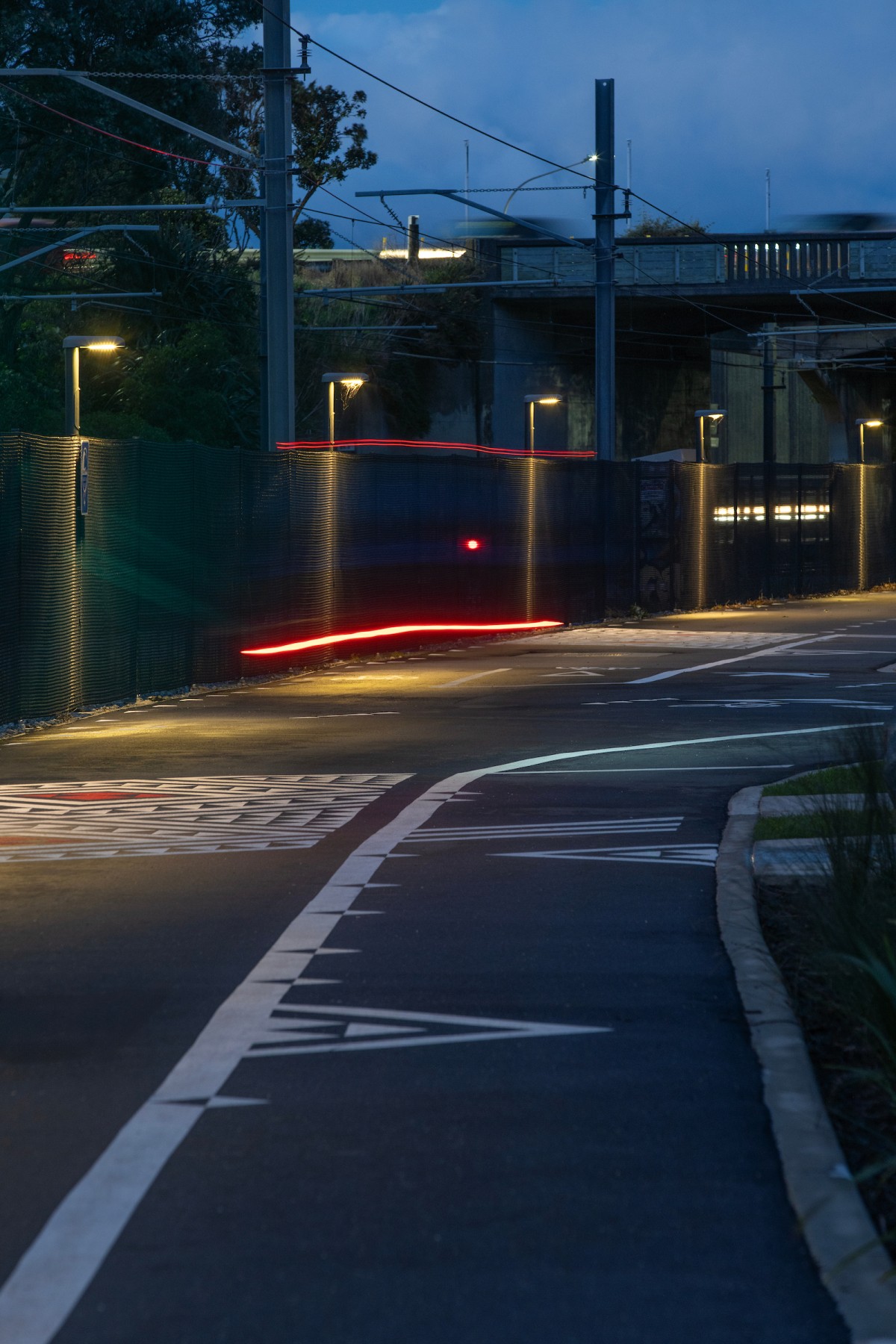
One of the unique challenges of Te Ara Tupua was its proximity to the rail corridor.
The lighting design needed to achieve appropriate visibility for pathway users while ensuring nearby train operations were not adversely affected by glare or distraction. Careful luminaire selection, positioning and light control were used throughout the project to balance these competing requirements.
The result is a lighting solution that successfully supports both active transport and rail infrastructure within the same corridor.
Along the pathway, five Ūranga provide moments for pause, gathering and connection with the harbour.
These spaces are much more than viewing platforms. They form important destinations along the journey, offering opportunities to experience the landscape, reflect on cultural narratives and engage with the waterfront environment.
The lighting design helps reinforce the identity of these spaces after dark, creating welcoming places to stop while contributing to a cohesive visual experience along the length of the pathway. Through careful integration with the wider design, the lighting supports the transition between movement and rest, encouraging people to engage more deeply with the harbour edge.
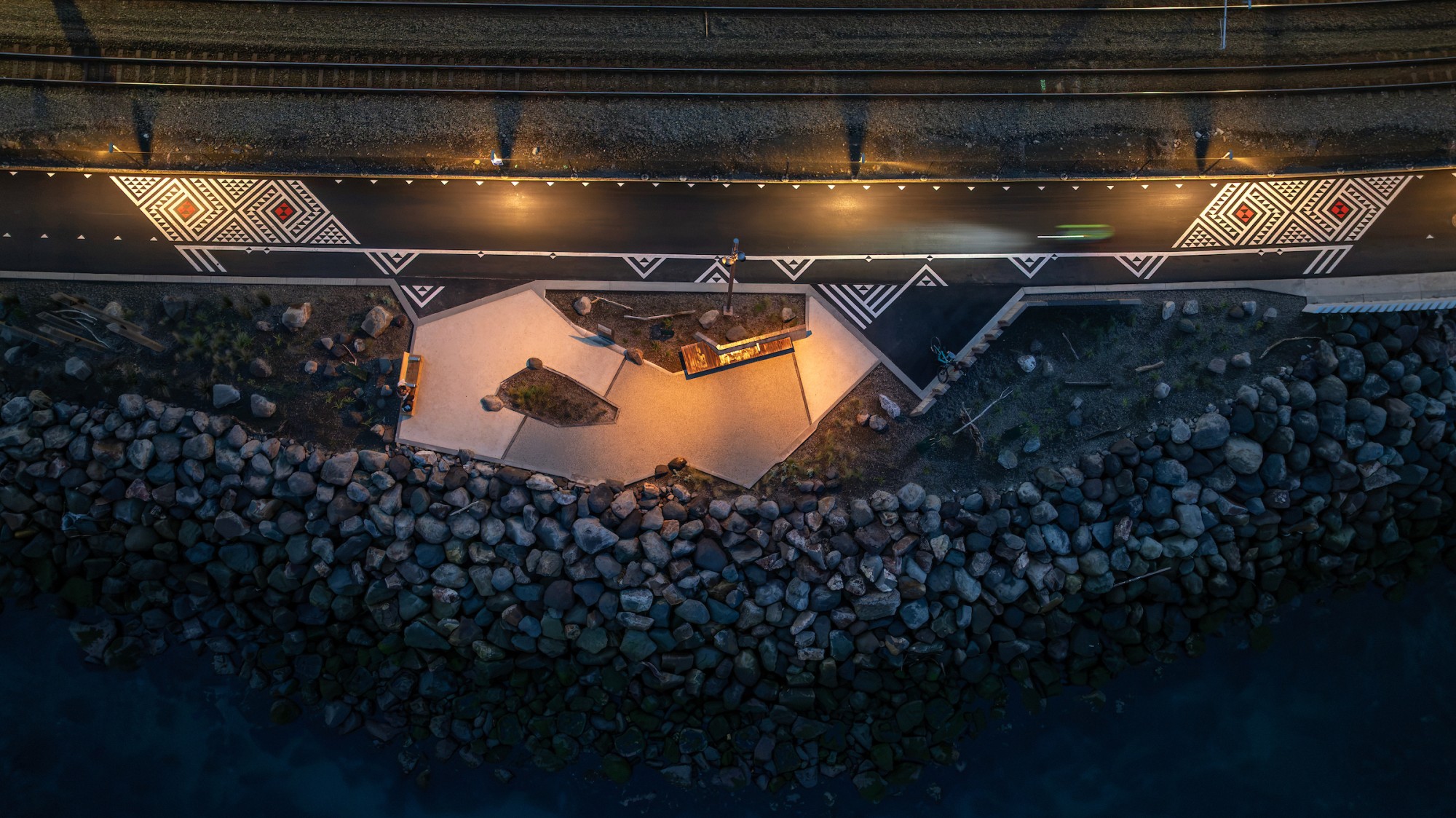
The lighting design for the Te Ara Tupua shared pathway and Ūranga spaces demonstrates how lighting can contribute to the success of major public infrastructure projects beyond basic functional requirements.
By balancing safety, accessibility, environmental stewardship and user experience, the project creates a night-time environment that supports active transport while strengthening people's connection to Wellington Harbour.
Explore more of the Te Ara Tupua shared path here