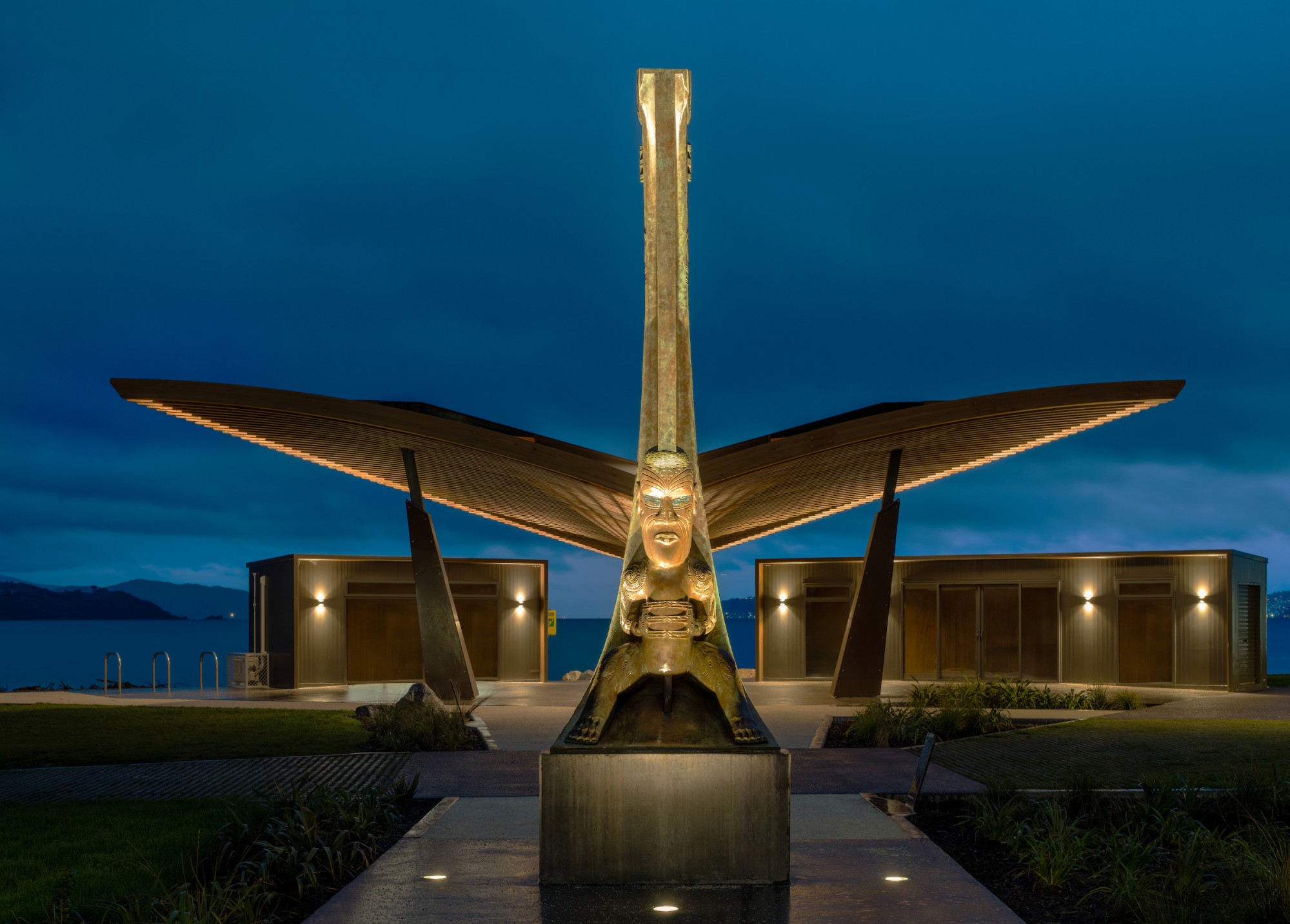
At the heart of the reserve are two significant cultural elements: the canopy sculpture Manu Tukutuku and the bronze taonga Te Kaiurungi o Te Puni. Together they provide a strong visual focus for the space and help establish the reserve as an important destination along the pathway.
Rather than treating these artworks as standalone objects, the lighting design was developed to support their role within the wider cultural journey of Te Ara Tupua.
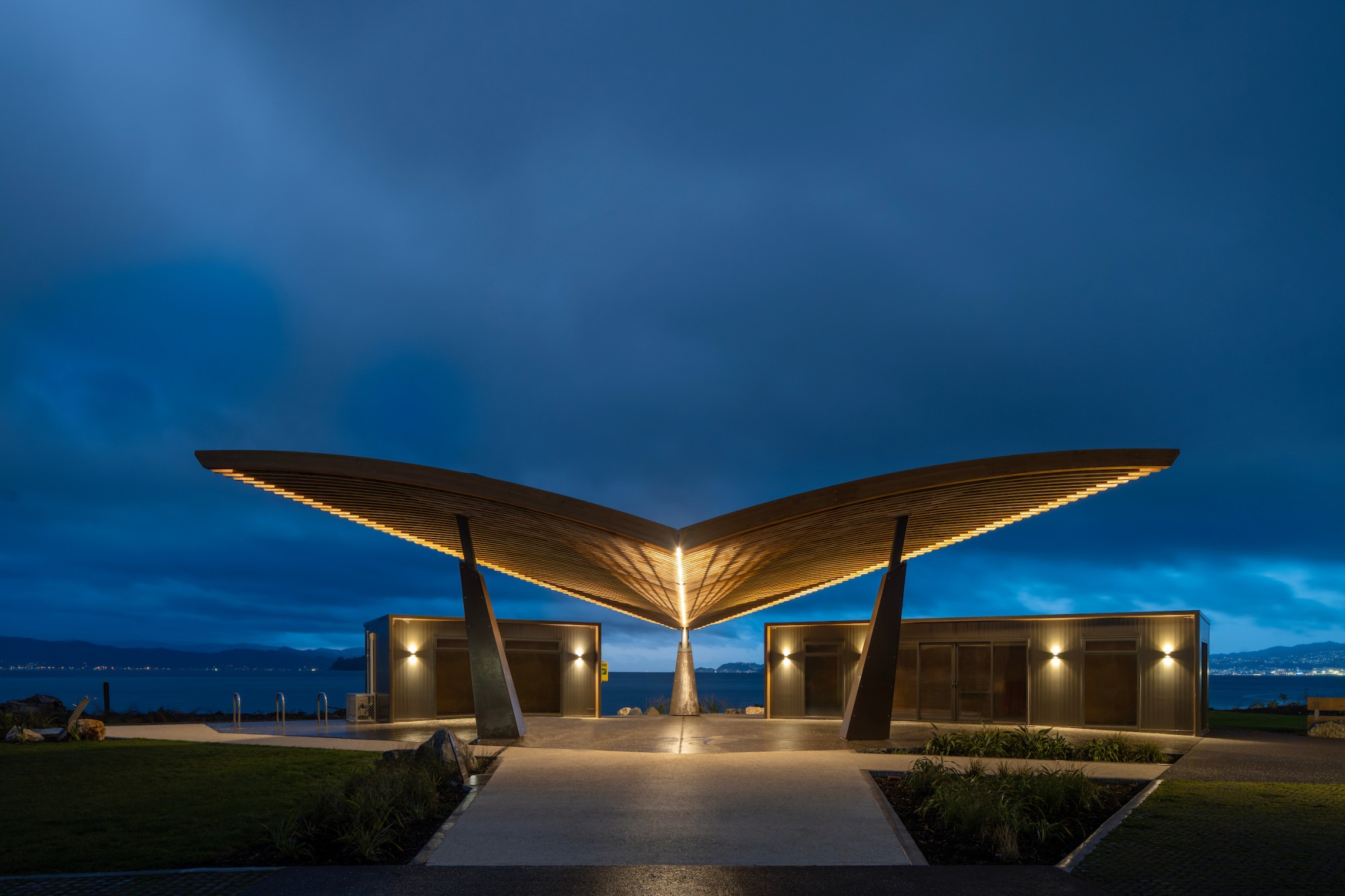
Effective sculpture lighting is about more than visibility. The goal is to help people experience the artwork as it was intended while revealing details, textures and forms that may otherwise disappear after dark.
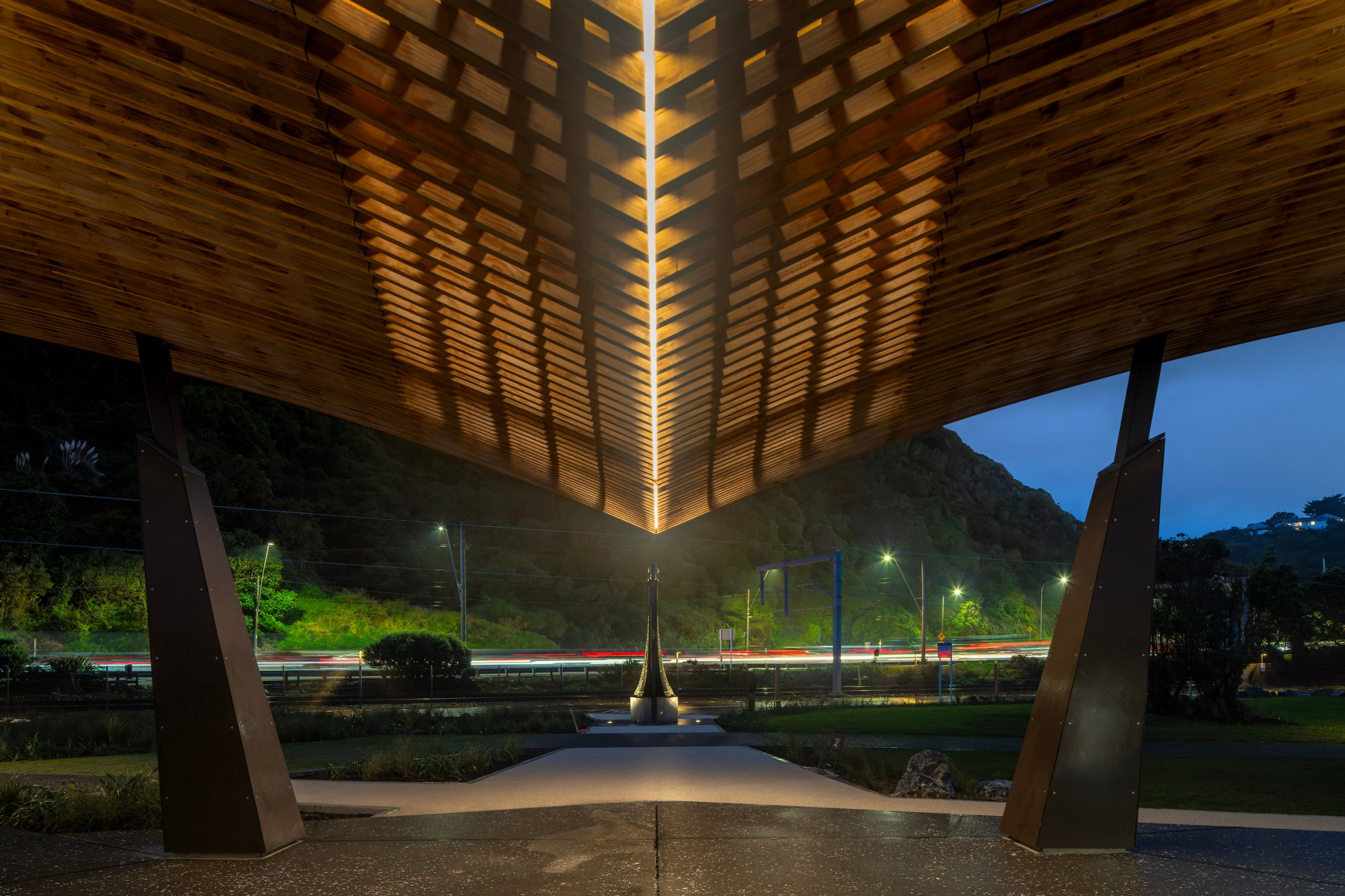
At Honiana Te Puni Reserve, integrated lighting traces the outer edges of the Manu Tukutuku canopy while carefully illuminating its internal structure. This approach helps communicate the artwork's reference to a traditional Māori kite while creating a sense of movement and lightness within the space.
The reserve also features Te Kaiurungi o Te Puni, a six-metre-high bronze taonga representing the stern of a waka. Lighting was used to establish this artwork as both a visual landmark and a key element within the wider narrative journey that extends along the Te Ara Tupua pathway. The sculpture creates a deliberate relationship with the tauihu represented at Te Mātarae o Wharepouri Bridge, linking the two destinations through a shared cultural story.
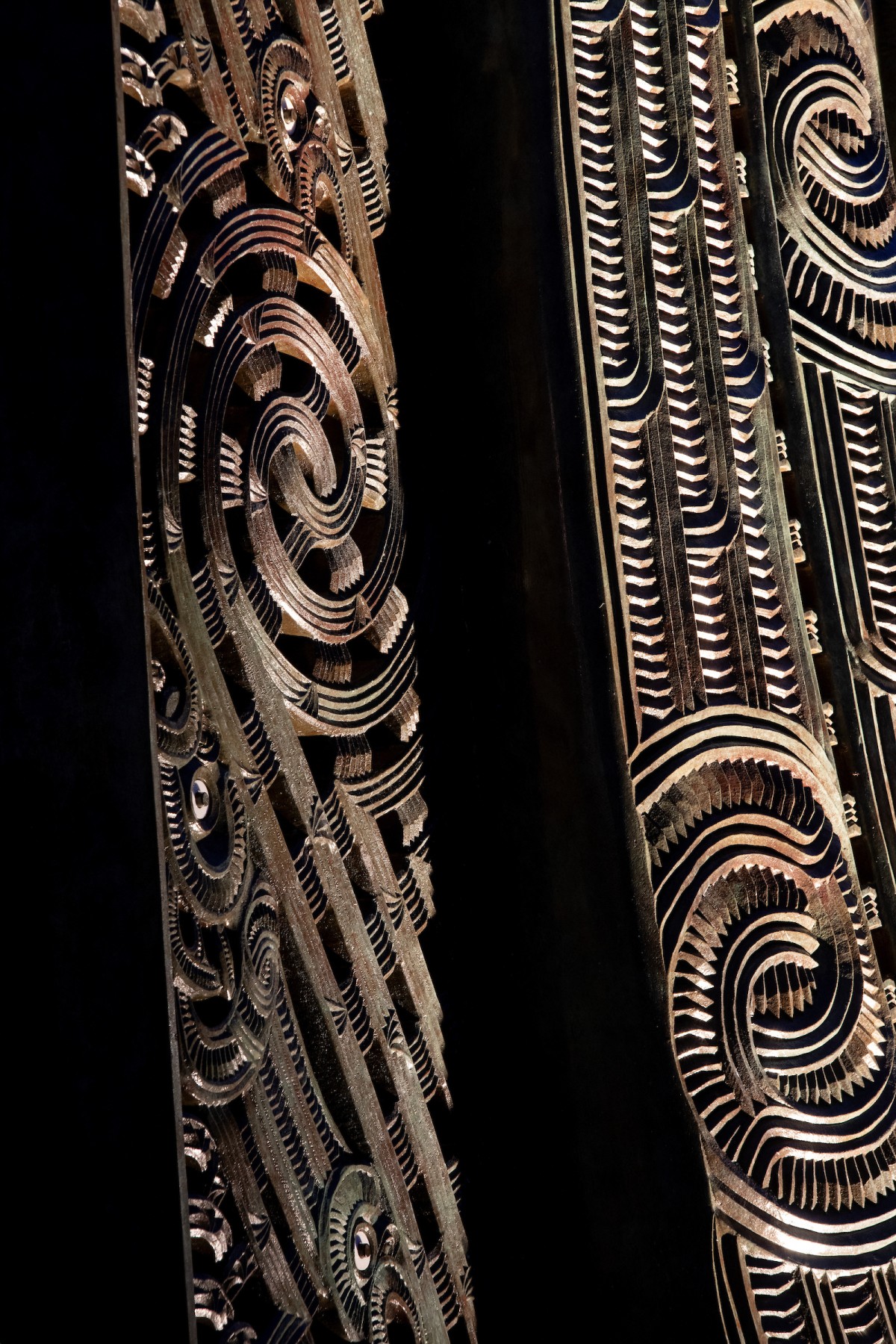
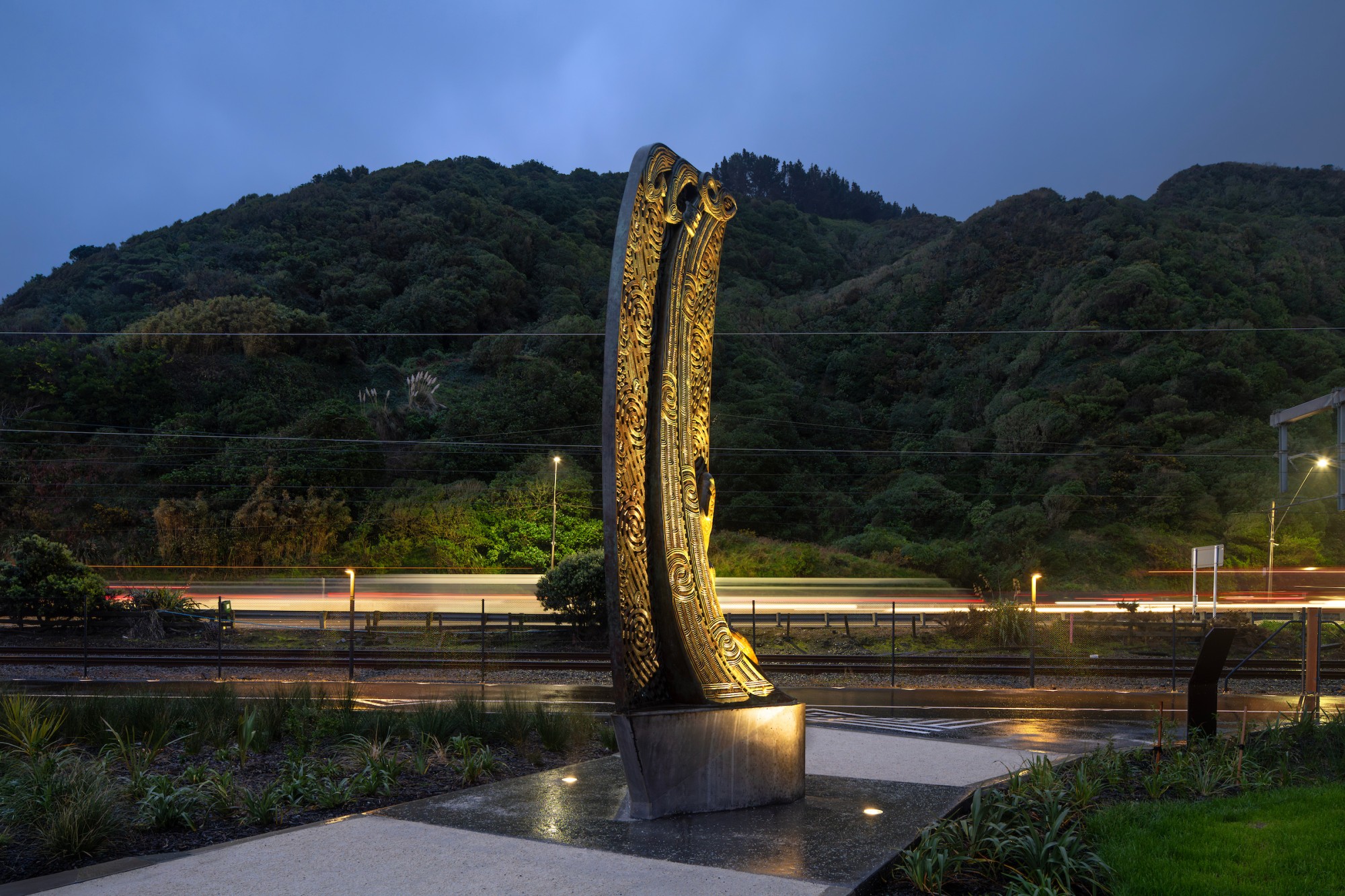
The project demonstrates that public art lighting can do more than illuminate an object. When integrated into the wider design story, lighting can strengthen cultural narratives, create memorable destination spaces and encourage people to engage with public places after dark.
At Honiana Te Puni Reserve, lighting becomes part of the storytelling itself, helping transform public artworks into meaningful landmarks within the wider Te Ara Tupua experience.