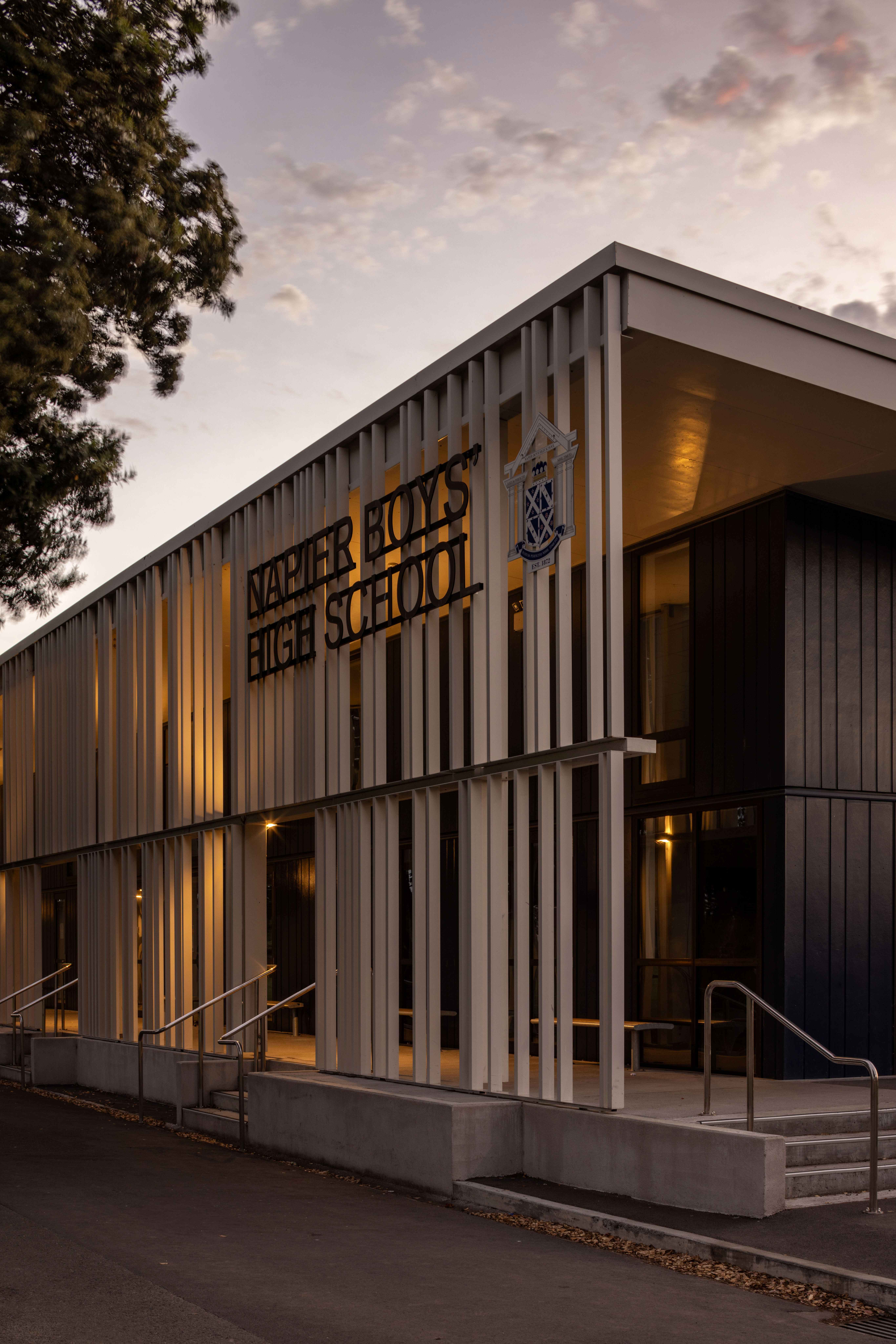
Condition assessments identified the existing Armour Block as end-of-life, creating an opportunity not only to replace ageing teaching spaces, but to use a key central site to kick-start wider campus rejuvenation. The project was underpinned by a long-term masterplan focused on strengthening the school’s organisation, circulation, and identity, including a renewed emphasis on the historic pedestrian entry from Te Awa Avenue and clearer separation between boarding and academic areas.
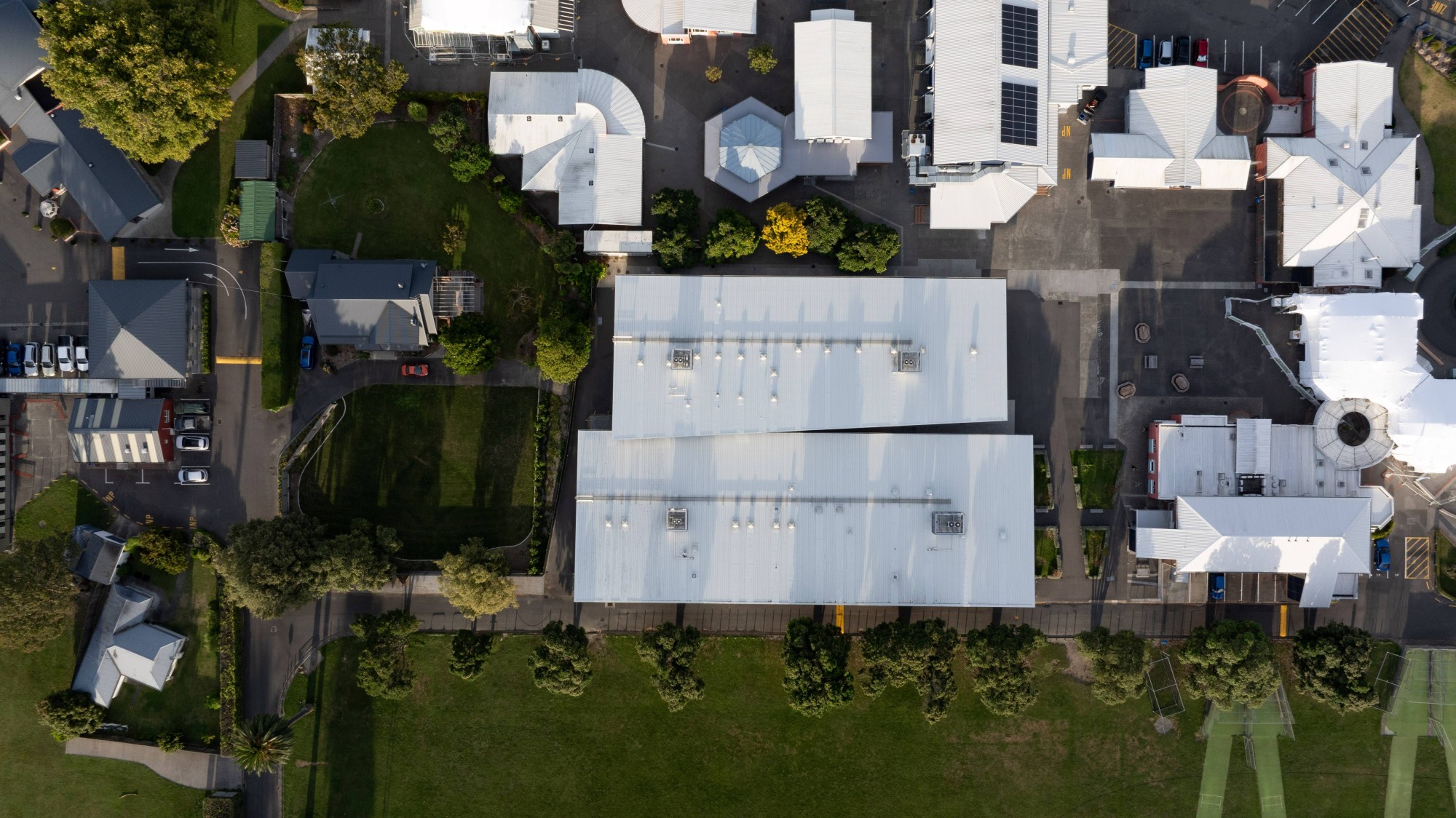
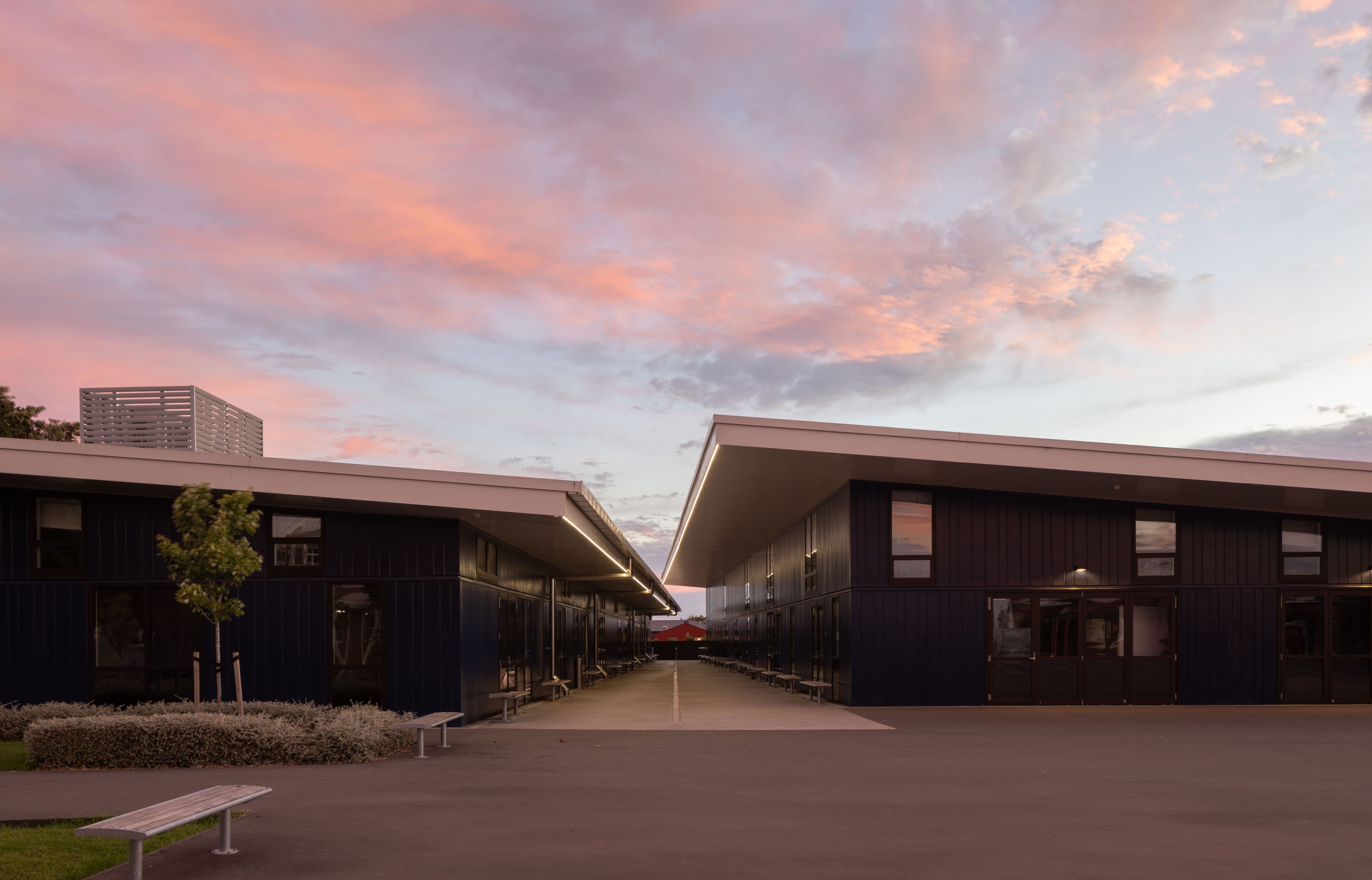
Rather than a single monolithic block, the solution was conceived as two related buildings with a covered outdoor learning area (COLA) between them. This move improves circulation, supports passive surveillance sight lines, and creates a comfortable shaded place for students to gather in Hawke’s Bay’s warm climate.
The English Block addresses the Quad, reinforcing its role as the social and ceremonial heart of the campus and enabling the Quad edge to operate as an ‘active’ openable frontage that can be used as a stage. The Science Block faces the primary sports field, strengthening the building’s relationship to school sport and daily movement across the site.
Charged with resolving contradictory requirements from the Ministry and School – where Napier Boys’ requested separate classrooms and the Ministry sought flexible learning environments – S&T designed clear span buildings where internal walls are non-loadbearing partitions that can be removed in the future if necessary.
The school sought the presence of a two-storey building but without the complications of moving students to and from a second floor. In response, the design presents an apparent two-storey façade, whilst remaining single level, through a carefully articulated external composition, presenting the higher façade of the building to the sports field and increasing presence and visibility from the School’s heritage entry.
A defining feature is the DNA sequencing-inspired louvred brise soleil to the Science Block that delivers practical solar control while giving the school a contemporary, academic identity that reads clearly from Te Awa Avenue and the field edge.
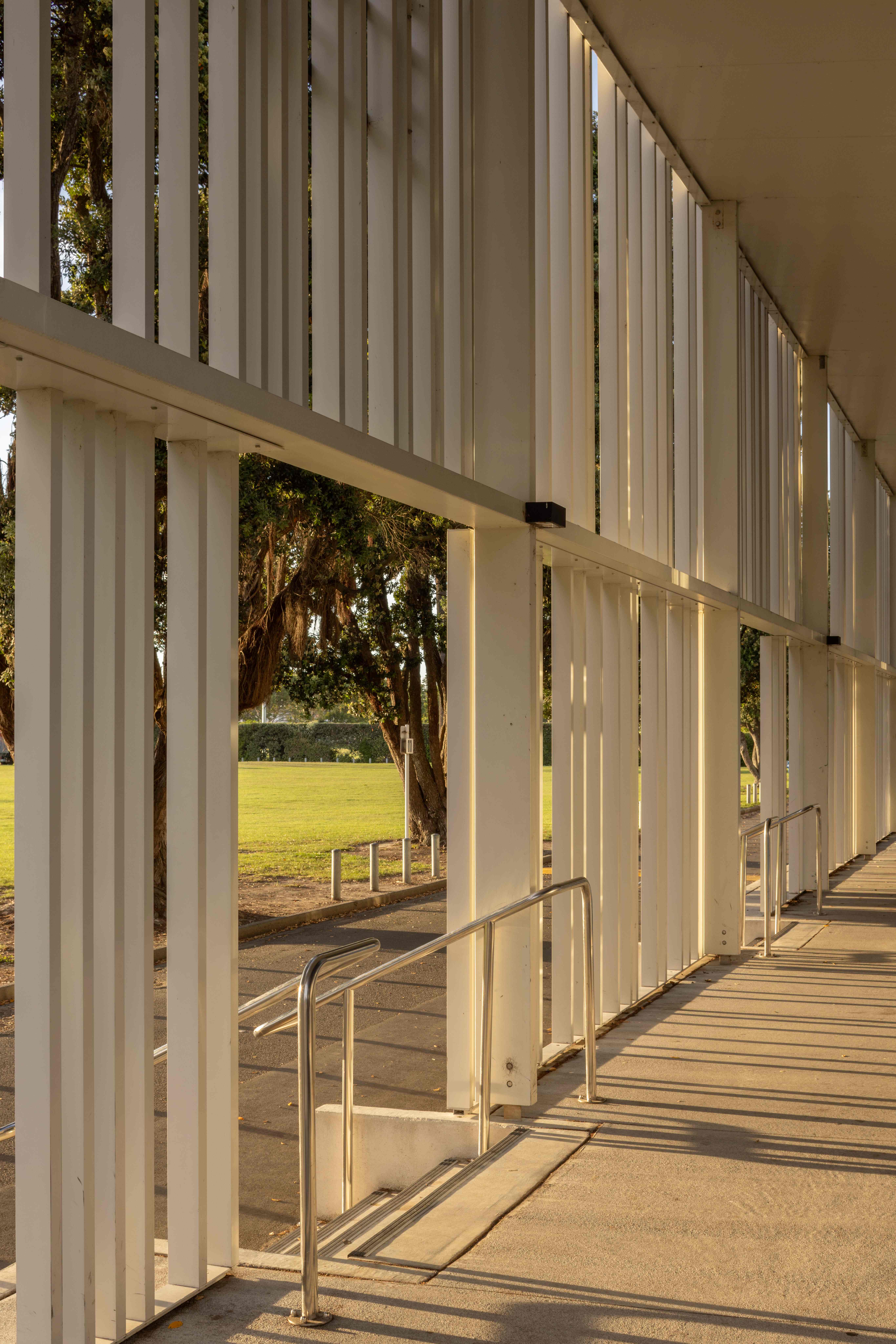
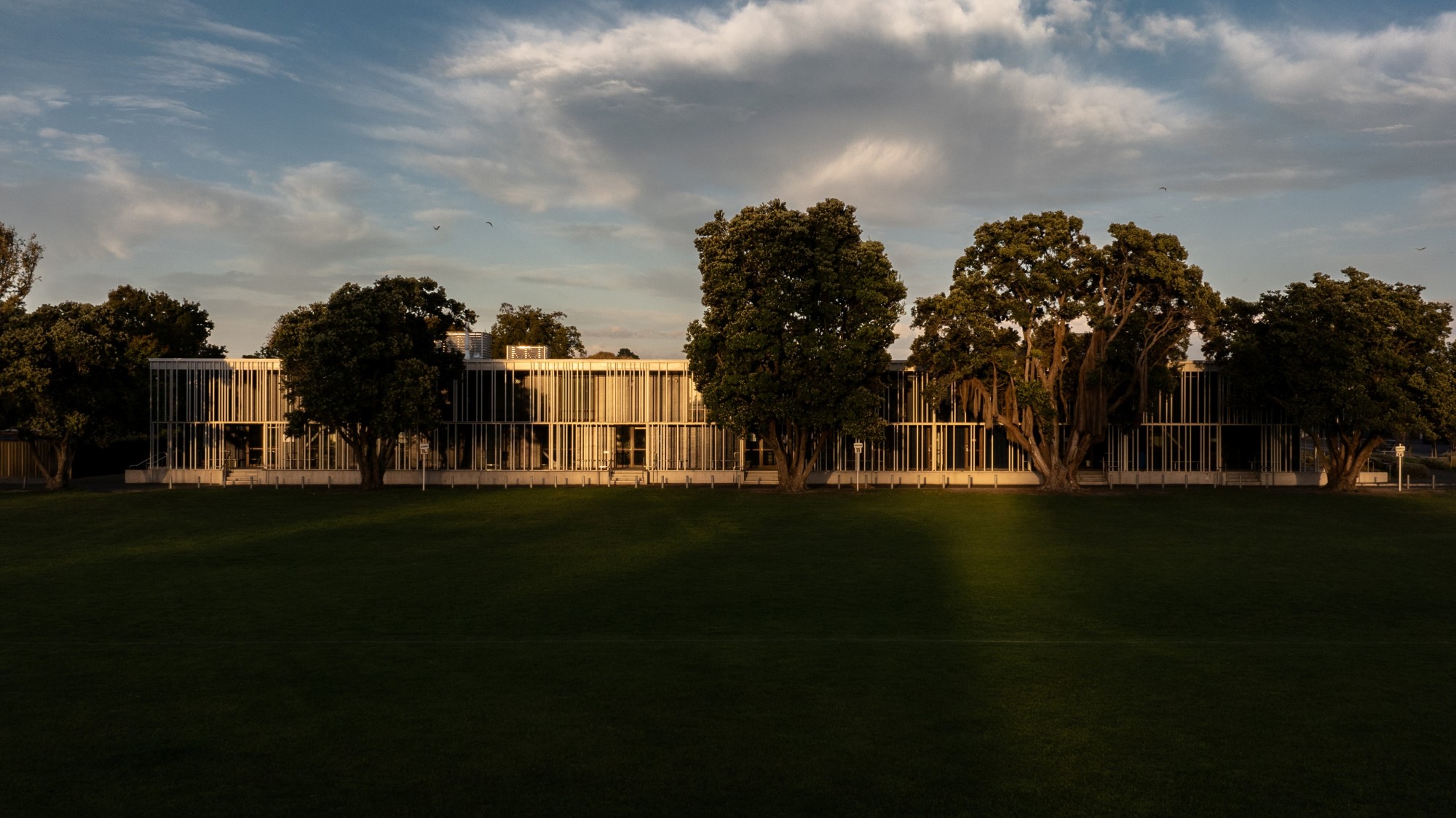
Comfort and performance were central drivers. Solar shading, glazing decisions, and window configuration were iterated and modelled to manage internal temperatures and reduce overheating risk.
Given the coastal proximity, the building was also elevated on a socle to support resilience against future sea-level rise, while strengthening its connection back to the campus behind with level thresholds.
The buildings were delivered in separable stages to maintain school operations and minimise decanting requirements.
A clear structural strategy underpins the building’s long-term adaptability. With no internal partition walls required for bracing, teaching spaces can be reconfigured as pedagogies evolve, while a disciplined one-metre modular grid enabling appropriate window placement for daylighting, ventilation, and ease of future change, an approach recognised with the project’s shortlisting in the 2025 Gisborne & Hawke’s Bay Architecture Awards.