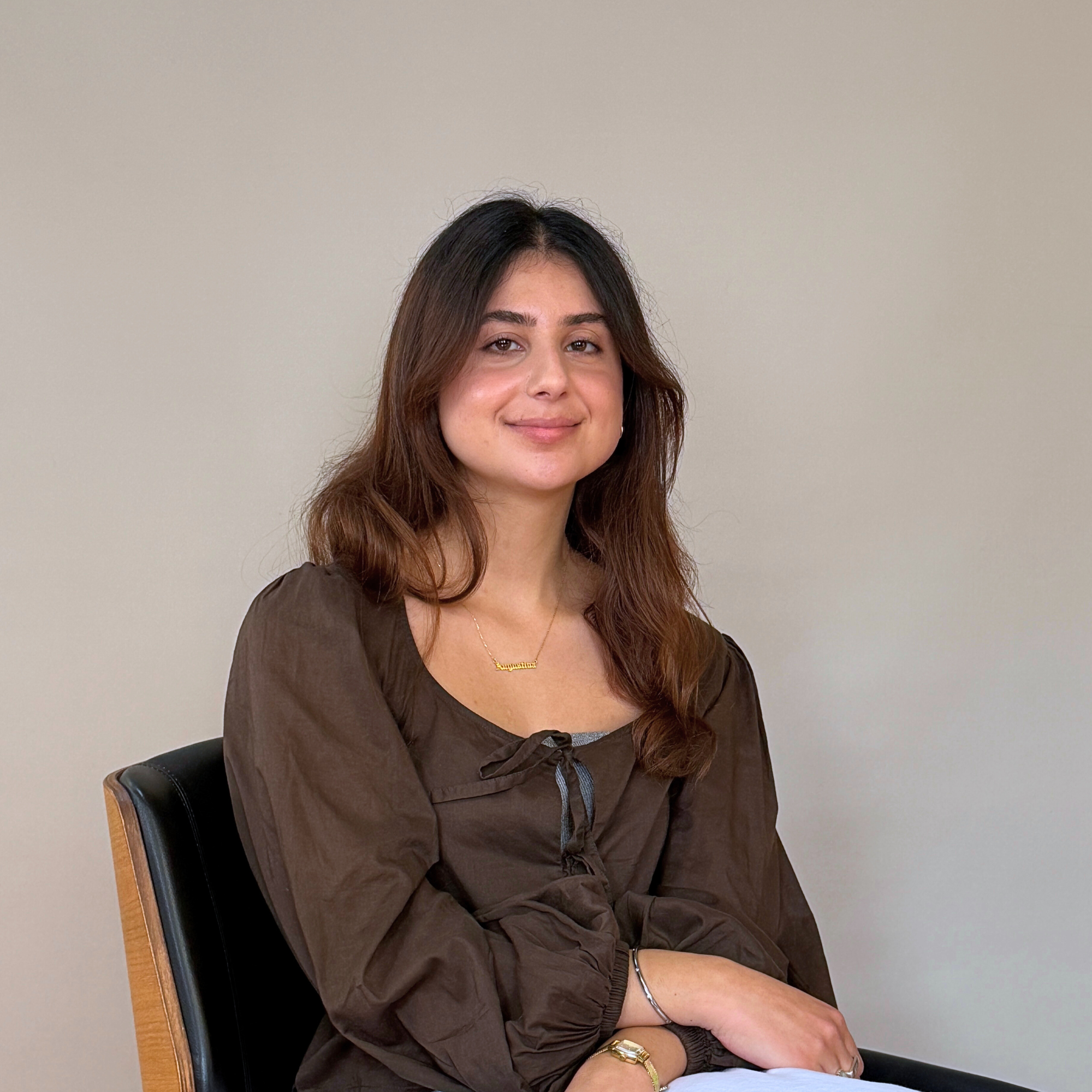
Growing up in Wellington, I’ve always seen it as a very characterful and layered city. So, I think I’ve naturally become quite aware of spaces and how people move through them. It’s also a city that connects you to nature~ beach and bush, which shaped how I see built environments as something that should not only serve a function but hold beauty in a way that enriches people’s lives.
Art and painting were always my favourite things at school, one day my art teacher pointed out how drawn I was to geometry and form and suggested architecture. It didn’t take much convincing!
I chose to study in Wellington, it made sense to study architecture in a city that had already shaped how I think about people and place.
My thesis year was probably my favourite. I chose to research craftsmanship and making, and how material knowledge can be brought back into the hands of the architect. I was interested in the disconnect between designing and making, and how that can lead to a loss of understanding of materials. I worked the entire year by hand through drawing, modelling, and making.
I also made a lot of furniture as material experimentation, which was really just an excuse to design and build a series of chairs! It taught me the value of working closely with materials, and how hands-on making can deeply inform design decisions through an intrinsic understanding of material.
I really appreciate the support to grow as a graduate, and the chance to work across a range of projects at different stages. It’s been great being exposed to different typologies early on and learning through that variety. I also value being able to share ideas and have some input into the design process.
I think I’ll always be drawn to the house. The programme is so familiar to everyone, which makes it deeply personal and rich to design. There’s an intimacy in shaping spaces that directly influence people’s daily lives, routines, and relationships.
I’m also really interested in civic buildings, where the scale and complexity create constraints that can push ideas in unexpected ways. My favourite building in Wellington is the National Library, it’s quite classically brutalist in its heavy concrete form, but the glass plinth at ground level adds a layer of openness that invites you in.
Architecture has to function, but I don’t think that should come at the expense of meaning. What’s important to me is finding ways to push beyond the purely pragmatic and create work that carries a sense of beauty and intent. I’m interested in how programme and constraint can be pushed through a more considered, almost artistic lens to create something with real substance.
While constraints like budget and brief can make that more challenging, I think that’s also where the opportunity lies. To test ideas and find moments of interest. It’s about creating spaces that do their job well, but also leave an impression.
Over the next 12 months, I want to really strengthen my technical skills and gain confidence working across all stages of a project, particularly understanding how designs are resolved and built. I’m enjoying being a sponge at the moment, learning through doing and seeing what it takes to bring a project to life on site.
Longer term, I’d like to become a registered architect and develop a design approach that balances strong ideas with buildability. Ultimately, I want to be able to carry projects through from concept to completion with a clear and considered design intent.